

target groups: Developers
Health care technologies
Guidance
User-centered design should be considered in the development of any technology or computer-based program for cognitive rehabilitation in people with dementia.
Explanation and Examples
User-centered design is a methodology applied in the development of programs or new technologies for cognitive rehabilitation in people with dementia. This design takes into account the target population from the beginning to the end of the development process, with the aim of investigating their needs and expectations, developing a prototype that meets these needs and evaluating the final prototype based on usability and user experience criteria.
Read more >
Social Health Domain 3: Technology to promote social participation
Guidance
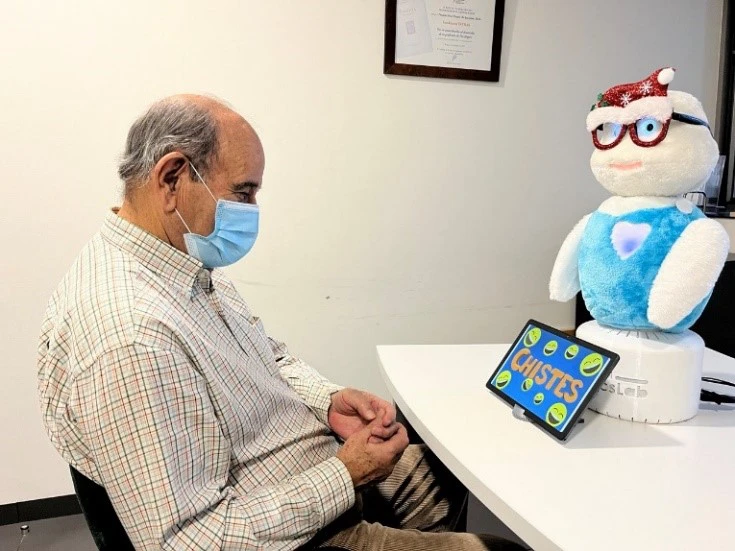
To successfully integrate social robotic platforms in community-based dementia care, such as Meeting Centres for people with dementia and carers and daycare centres, their features and applications need to be tailored to the needs and preferences of the end-users, the dynamics of group interactions, and the Meeting Centres’ activity policies and settings.
Explanation and Examples:
Research through focus groups and interviews with stakeholders on potential facilitators and barriers in the implementation of the social robot MINI indicated that for a successful implementation of social robots in Meeting Centres and daycare centres for people with dementia, it is expected to be crucial for social robot designers and developers to consider the following recommendations to guide the design of the robotic platform:
- Evaluate the needs and preferences of the participants of Meeting Centre. Qualitative research with end-users and care professionals is essential before and during the robot development phase. This will ensure the acceptance and usefulness of the robot in such contexts.
- Given the preference for group activities in Meeting Centres over individual activities, it is crucial to integrate the robot into a group setting so that it can interact with multiple users. For example, a multi-player game could allow two or more individuals to interact with a social robot at the same time.
- Avoid designing games and quiz-like activities for use on social robots to avoid, in line with the activity policy of Meeting Centres, confronting persons with dementia with their shortcomings in activities that have high cognitive and memory function demands. Instead, fun, enjoyable, and relaxing applications and games would be most appealing and beneficial.
Read more >
 As the INDUCT project manager, most of my tasks have been ‘behind the scenes’. I have been responsible for submitting scientific deliverables, writing reports for the funder, negotiating deadlines and updating the EU Portal. A project manager functions as a middleman between the EC Project Officer, beneficiaries, partners and ESRs.